
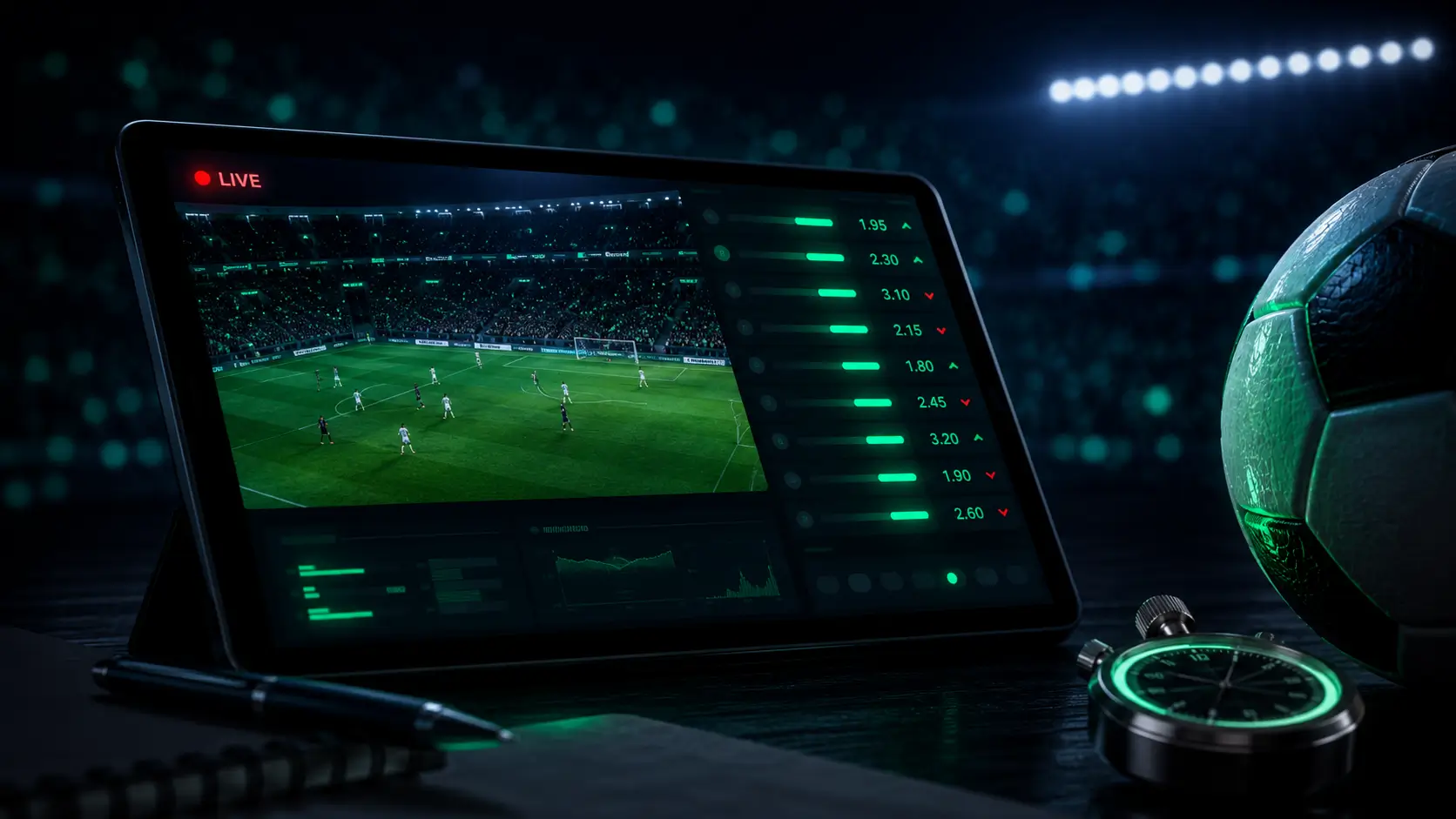
How In-Play Betting Works
Live betting lets you place bets after an event has started. Odds update constantly to reflect the score, time remaining and momentum, which creates opportunities that were not available before kick-off — and closes them again within minutes.
Behind the moving numbers sits a pricing engine recalculating every market many times a minute. A goal reshapes the entire board instantly; a red card, an injury to a key player or even sustained pressure shifts prices in seconds. When something major happens, markets suspend entirely — the familiar padlock icons during a VAR check — and reopen at new prices once the situation is clear.
Two mechanical quirks matter before your first live bet. The first is the bet delay: most bookmakers hold a submitted live bet for 5–10 seconds before accepting it, so they can void the price if a goal lands in between. The second is price movement at confirmation — if the odds change while your bet is in flight, the site either rejects it or offers the new price. Neither is the bookmaker cheating; both are the cost of betting on a moving target, and knowing they exist prevents the frustration that pushes beginners into hasty re-bets.
Best Markets for Live Betting
- Next Goal: short, self-contained and easy to judge.
- Over/Under Goals: prices drift as the clock runs down.
- Asian Handicap: adjusts sharply after a red card or an early goal.
Next Goal is the natural starting market because it matches how you actually watch a match: you can see which side is pressing, and the bet resolves quickly enough to keep decisions and outcomes connected. It is also the market where genuine match-reading skill shows up fastest against the odds.
Over/Under is the clock market. As minutes pass without a goal, the over price lengthens mechanically — so a bettor who believes a cagey first half is concealing an open second half can get meaningfully better prices at half-time than at kick-off. The reverse discipline matters too: chasing overs at short odds in the 80th minute because “one of these chances must go in” is how live bankrolls leak.
Handicaps reward the situational read. A favourite conceding an early goal often sees its handicap price overreact — if your judgement says the better side will still take control, the value window is those few minutes of market panic. These moments are exactly where watching beats modelling.
Using Streams and Stats
The best live sportsbooks show shot counts, possession and dangerous attacks alongside the odds. A team dominating without scoring often offers value on the next goal market — the odds react mostly to the score, while your eyes react to the pattern.
That gap between scoreboard and performance is the honest edge in-play betting offers. The pricing engine knows it is 0-0; it is slower to know that one side has had nine shots and three big chances. Stats panels close some of that gap, but sustained viewing closes more of it — momentum, fatigue, a defender playing through injury and a substitution changing the shape are all visible before they reach any data feed.
Delay is the fine print on all of this. Streams typically run 15–60 seconds behind the action, and the bookmaker’s own data feed is faster than your picture. You are always betting slightly behind reality — which is fine for reads about patterns and momentum, and hopeless for reacting to single events. If your live bet is a reaction to something that just happened, assume the price already knows.
Managing Speed and Emotion
Live betting compresses the entire emotional cycle of gambling — anticipation, result, reaction — from days into minutes, and that speed is precisely what makes it both entertaining and dangerous. The pre-match bettor gets hours to cool off between decision and outcome; the live bettor can lose, feel the sting, and stake again inside ninety seconds. No other form of sports betting invites chasing so efficiently.
The defence is deciding everything before kick-off: how many live bets this match gets (two or three is plenty), the maximum total stake, and the rule that a lost live bet is never answered with another in the same half. Written down, these rules hold; improvised mid-match, they lose to adrenaline every time. Deposit limits and session reminders — free at every licensed bookmaker — backstop the plan on the evenings discipline runs thin.
One more habit separates live bettors who last: treat no-bet matches as normal. Watching a game with a plan to bet only if a specific situation appears — and closing the app when it doesn’t — is the live-betting equivalent of value discipline. The staking principles that govern the rest of your betting apply doubly here.
Cash Out During Live Bets
Cash out is most useful in-play, letting you lock in profit when your position is strong or cut losses when the match turns. The two features are natural partners: live betting creates the swings, and cash out lets you exit mid-swing rather than riding every position to the whistle.
The discipline is knowing that every cash-out offer includes the bookmaker’s margin — the price of certainty is a few percent of fair value, every time. Cashing out because the situation genuinely changed (a red card, an injury, a tactical shift you watched happen) is sound risk management; cashing out because watching is uncomfortable is a slow leak. The full decision framework is in our cash out guide.
For bettors who want the middle path, partial cash out — banking some profit while the rest rides — turns a nervous position into a comfortable one without paying the full margin on the whole stake.
A closing thought on choosing where to bet live: in-play quality varies more between bookmakers than almost any other feature — settlement speed, suspension frequency, interface responsiveness and market depth all differ visibly under Saturday load. Our live betting rankings compare the books on exactly those tests, because a slow live console costs you prices in a way no pre-match comparison ever reveals.
 1xBet 4.9
 100% Bonus up to $130
- 60+ sports, 1,000+ daily markets
- Odds margins from ~2.5%
- 250+ deposit methods
T&Cs apply